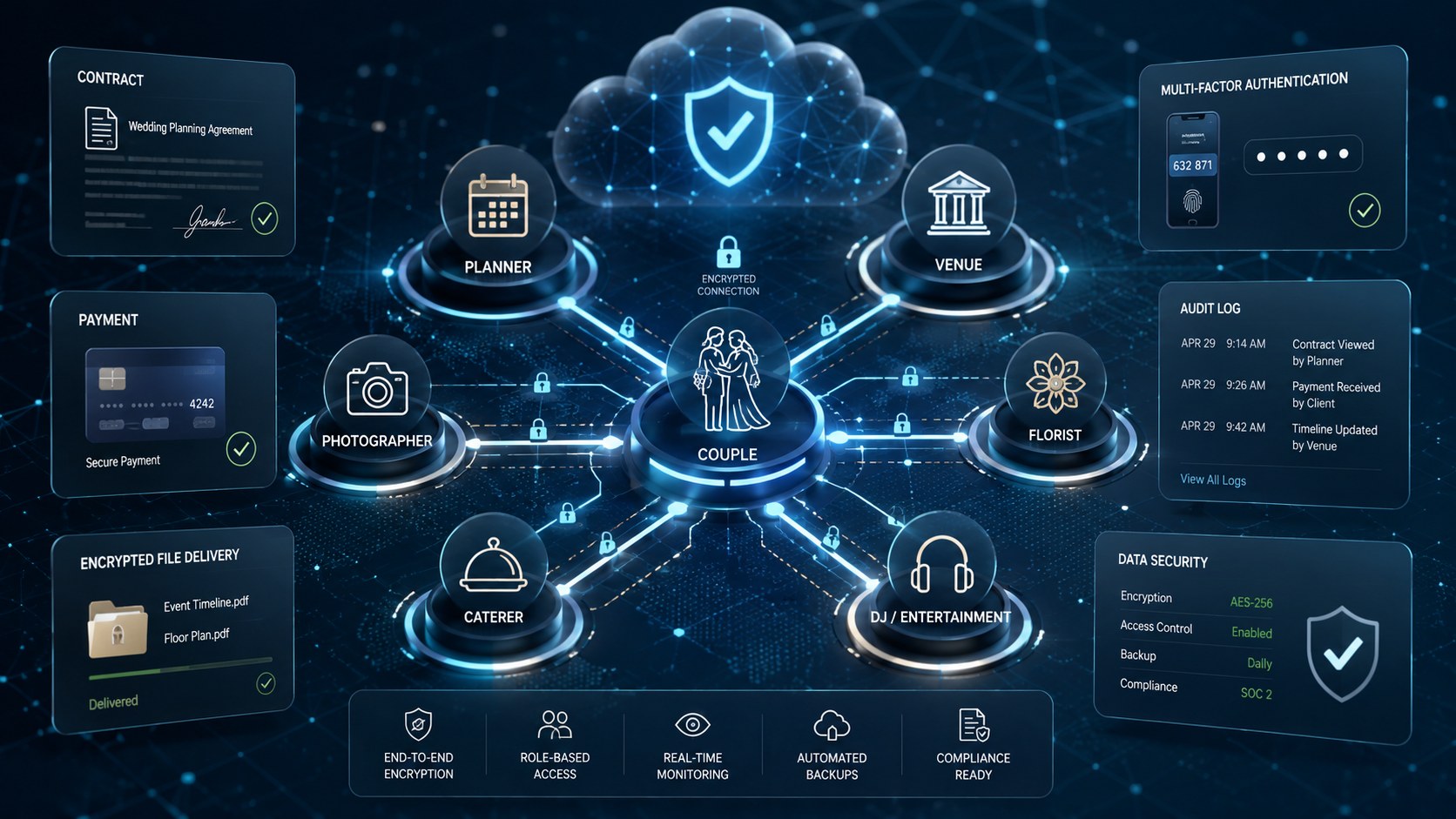
In the post-ZIRP environment of 2026, private equity operators and early-stage venture investors face a stark valuation reality: feature-layer SaaS platforms without native organic distribution are operating on borrowed time. While consumer-facing B2C giants like Joy raise mega-rounds to capture bride-and-groom onboarding, the B2B localized vendor landscape — representing the actual transactional engine of the $1B+ global wedding software sector — remains fragmented. Early-stage startups that focus exclusively on frontend software features while ignoring asset-level domain authority, localized search indexation, and organic acquisition architectures face rapidly compressing EV/Revenue multiples and operational paralysis.
This editorial analyzes the strategic asymmetry between Category Domain and Search Infrastructure Holders and Feature-Layer SaaS Startups, outlining why asset-contribution joint ventures and strategic IP consolidation represent the most capital-efficient exit or scaling pathway in the current economic climate.
I. The Macro Landscape: The 2026 Vertical SaaS Reset
The 2026 SaaS market has bifurcated cleanly. Horizontal and un-moated feature SaaS has seen multiple compression drive valuations down to roughly 4.7x–6.1x private ARR medians, with customer acquisition costs eroding margin profiles. Category infrastructure and vertical distribution networks — assets that own organic search graphs, category-defining root domains, and localized Answer Engine Optimization networks — command premium multiples because they reduce CAC to near-zero.
The structural picture is a two-tier stack. At the top sits categorical infrastructure: category-defining root assets and the search engine graph — the weddings.io and videographers.io class of property. Beneath it flows a low-CAC organic distribution pipe into the feature and fulfillment layer: video squads, CRM, booking and timeline tools, and every other capital-intensive operational surface. Startups operating without category domain authority routinely fall into the Feature Trap: spending 60–70% of gross margin on paid user acquisition and manual outbound sales while failing to build lasting entity authority in search engines or AI knowledge graphs.
II. Valuation Asymmetry: Category Real Estate vs. Operational Software
When an asset holder owning prime category infrastructure — exact-match category domains, established provenance, indexed schema networks — collides with an operational startup squatting on or infringing upon that trade identity, traditional litigation is rarely the most capital-efficient resolution for either board. From a financial engineering perspective, both entities bring asymmetrical balance sheet contributions.
The operational startup's primary value driver is its code base, visual output, and media features — assets that are low defensibility and easily cloned. Its CAC profile is high, dependent on paid ads with low organic reach, and its diligence vulnerability is high because IP is frequently clouded by platform takedown liability. The category infrastructure holder's primary value driver is root domain authority, search index equity, and the AEO graph — high defensibility rooted in un-copyable domain provenance and category mark. Its CAC profile is zero or negative thanks to organic inbound traffic and vendor pull, and diligence is clean, backed by unbroken chain of title and established prior use.
When an operational startup faces an active trademark dispute or corporate registry objection, its ability to execute institutional raises or secondary exits is effectively frozen. Institutional VC due diligence flags clouded IP ownership immediately, turning core brand disputes into existential deal-breakers.
III. The Asset-Contribution Deal Model
Instead of destroying capital in prolonged trademark litigation or forcing an expensive corporate rebrand that destroys historical indexation, sophisticated operators utilize the Asset-Contribution Joint Venture Model. The infrastructure holder contributes the root category asset, SEO and AEO distribution, and advisory direction via a licensing arrangement. The operational startup contributes equity, cash, and its fulfillment engine — development, technology, and production media teams. Both flow into a combined capitalized vertical entity.
The deal terms follow a repeatable pattern. An upfront capital allocation or asset fee — typically $50k–$250k or more — is paid to the infrastructure holder upon execution to equalize prior asset development costs. A priority revenue or licensing retainer of $5k–$10k or more per month is guaranteed to the asset holder ahead of equity profit distributions, compensating for ongoing domain and search distribution authority. A non-dilutable equity stake of 15%–30% is granted to the asset holder, ensuring upside participation in subsequent funding rounds or strategic exits. And the operational startup's engineering and production teams are integrated directly into the infrastructure holder's broader platform ecosystem — cross-syndicating media across adjacent vertical properties.
Conclusion
In vertical SaaS, software features are commodities; distribution infrastructure is real estate. Startups that mistake brand name availability for legal and technical domain authority inevitably run out of capital runway when faced with active enforcement. For operators holding category-defining assets, maintaining a patient, firm, and structured position allows market forces and due diligence realities to force a choice on opposing teams: pay to acquire the foundation, or pay double to rebrand from scratch.
References
- Business Research Insights (2026). Global wedding planning software market valued at ~$1.07B in 2026, projected 15.5% CAGR through 2035. businessresearchinsights.com
- Aventis Advisors / Value Add VC (2026). Median private SaaS M&A EV/Revenue multiples compressed to 4.7x–6.1x ARR in the 2025–2026 cycle from ZIRP highs of 17.4x. aventis-advisors.com
- Modall SaaS Index (2026). 85%+ of modern vertical SaaS companies have transitioned to usage-based or hybrid monetization; paid-social-dependent platforms see CAC ~3x higher than organic/AEO peers. modall.com
- NVCA Model Legal Documents. Standard representation and warranty frameworks require unencumbered, non-infringing title to primary domain assets and business names. nvca.org
- PR Newswire. Joy — $108M aggregate funding, concentrated in B2C consumer tools. prnewswire.com